

When planning to construct a new garage on your Canadian property, it’s common to encounter a few hurdles, particularly those related to easement building restrictions in Canada. Understanding these limitations is crucial for any property owner intending to maximize their land use without legal complications. But what exactly are easements and rights of way, and how do they impact your building plans?
Understanding Easements and Rights of Way
Easements are essentially legal rights granted to a third party to use a portion of your land for a specific purpose. These rights can significantly influence where you can or cannot build structures such as garages. Typically, easements are established for utilities, allowing access for maintenance or installation of services like water, electricity, and gas. Rights of way, on the other hand, usually pertain to access paths used by neighboring properties or public pathways.
For instance, if you plan to construct a garage, you must ensure that your plans do not infringe on any existing easements. Ignoring these restrictions can lead to legal disputes and even force you to dismantle newly constructed buildings.
The Impact of Easements on Building Plans
Before setting your heart on a particular garage design or location, check the Maximum Garage Size allowed in your area. Easements can limit the space available for construction, thereby influencing the size and placement of your garage. Additionally, some easements may completely prohibit the erection of permanent structures within their boundaries.
It’s essential to have a clear understanding of your property’s legal boundaries and any associated easements before proceeding with construction. Consulting with professionals like land surveyors can provide clarity and ensure compliance with local regulations. The Association of Ontario Land Surveyors is an excellent resource for finding qualified surveyors in Ontario.
Identifying Easements on Your Property
To identify any easements affecting your property, review the land title documentation or consult with local municipal offices. These documents often detail any existing easements, including their nature and geographical scope. Additionally, consider engaging a professional surveyor for a precise assessment of your property lines and potential restrictions.
Legal Implications of Building on Easements
Building on an easement without permission can have serious legal repercussions. Not only might you face fines or be required to modify or remove unauthorized structures, but you may also encounter conflicts with utility companies or neighbors who hold legitimate claims to those rights of way.
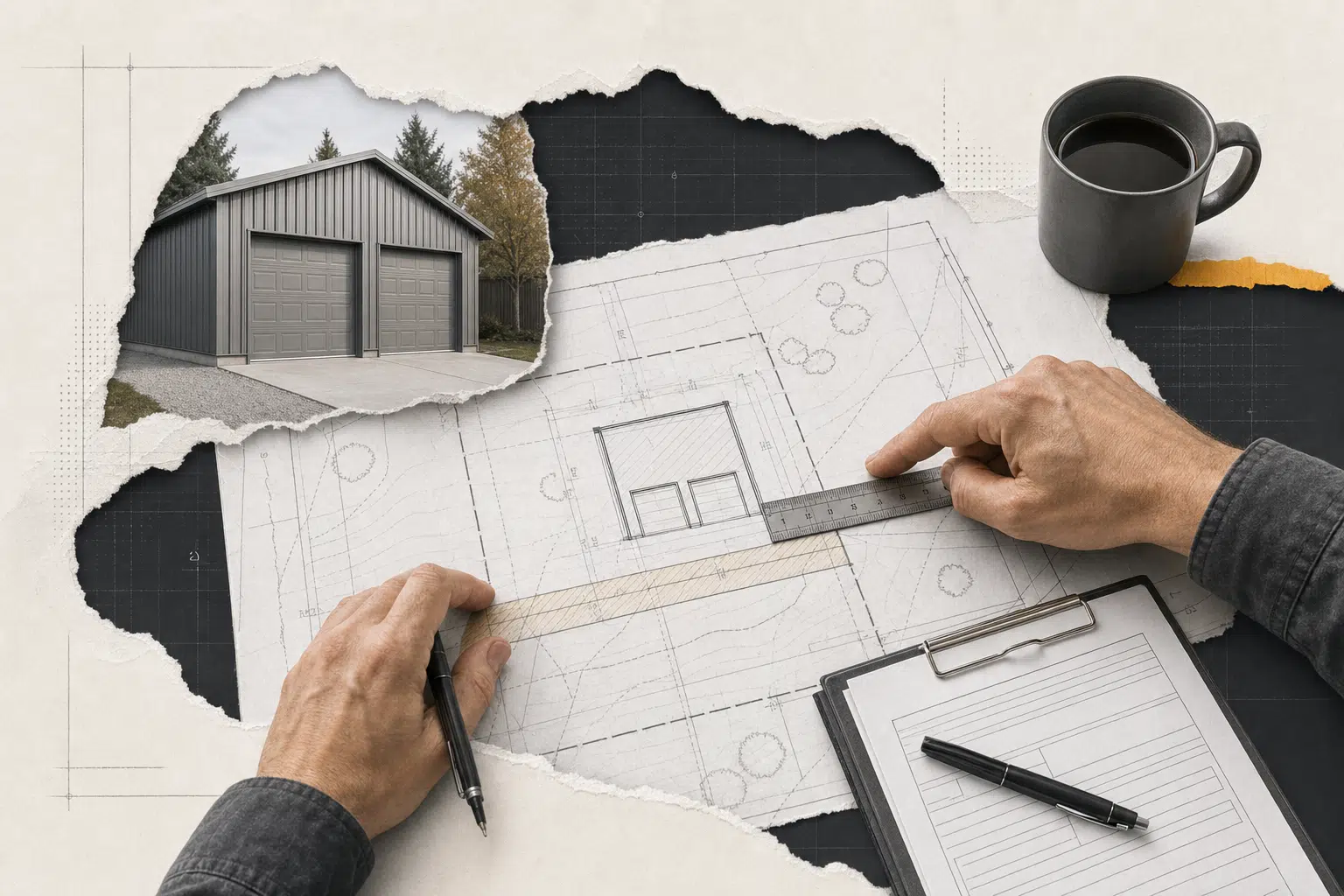
Planning Your Garage Construction
Once you’ve identified any easement constraints, it’s time to plan your garage construction accordingly. If you’re considering building something like a 24×36 C-Channel Prefab Garage Kit, ensure that the location respects all easement boundaries.
Drafting a comprehensive site plan is crucial for obtaining permits and ensuring compliance with local building codes. For more information about what’s required, check out our guide on Site Plan Requirements.
Consulting Professionals for Guidance
If you’re unsure about how easement restrictions might affect your project, it’s always wise to consult professionals who specialize in real estate law or urban planning. These experts can provide insights into navigating local regulations and help you make informed decisions.
The Role of Prefab Structures in Navigating Easements
Prefab garages offer flexibility in design and placement that can be advantageous when working around easements. For example, the 30×40 Peaked Straight Quonset in Brandon, Manitoba demonstrates how modular solutions can adapt to various site conditions while maximizing available space.
Navigating the Path Forward
No one wants their dream garage project derailed by unexpected legal issues. By understanding easement building restrictions in Canada and planning around them effectively, you can ensure a smoother construction process. If you’re ready to move forward with your project, feel free to Request a Quote from our experts today.
The Importance of Due Diligence
Before breaking ground on any project, conducting thorough due diligence is key. This includes checking municipal bylaws and understanding service areas across Canada that might impact your build. Our extensive service areas across Canada ensure you receive tailored advice no matter where you’re located.
In summary, while easements might seem like minor stipulations hidden in legal jargon, they hold significant sway over what you can build on your land. Being proactive about understanding these restrictions will pave the way for successful garage construction projects across Canada.