
Motorcycle Garage Ideas: Secure Storage for Bikes and Gear
Motorcycle garage ideas are practical ways to house one or several bikes, tools, and riding gear in a compact, secure space. They suit riders with limited driveway room who still want a clean work corner and proper winter layup. The biggest trade-off is manoeuvring space: the tighter the footprint, the more carefully you’ll plan door width, aisle clearance, and storage to avoid pinballing bikes around.
What size garage fits 2–4 motorcycles, tools, and a bench?
For one or two bikes and a small 600 mm (24 in) deep bench, a 3.0 x 5.0 m (10 x 16 ft) shell works if you keep 900 mm (36 in) of side clearance and a 1.2 m (48 in) centre aisle. Parking in a tandem garage layout lets three bikes fit in 3.7 x 6.1 m (12 x 20 ft) while keeping a 1.0 m (39 in) walkway. For four bikes with gear lockers and a vice station, 4.3 x 6.1 m (14 x 20 ft) is comfortable. Aim for:
– Door: 2.7–3.0 m (9–10 ft) wide, 2.1–2.4 m (7–8 ft) high for easy roll-in.
– Ceiling: 2.4 m (8 ft) minimum; 2.7 m (9 ft) clears a ceiling hoist.
– Bench: 600 mm x 1.8–2.4 m (24 in x 6–8 ft) with 1.0 m (39 in) standing clearance.
– Storage: 450 mm (18 in) deep lockers; helmet shelf at 1.6–1.8 m (63–71 in).
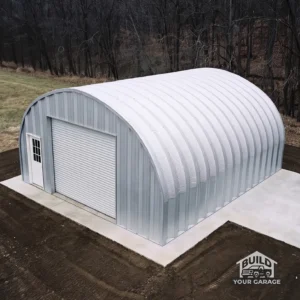
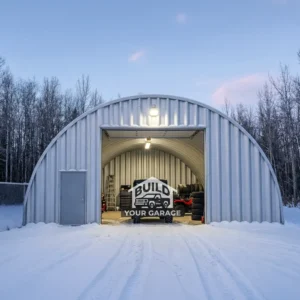
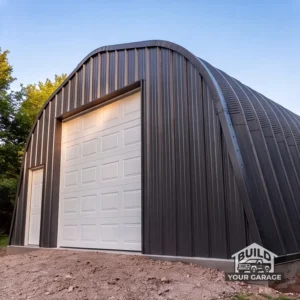
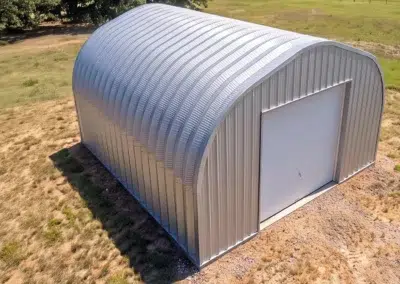
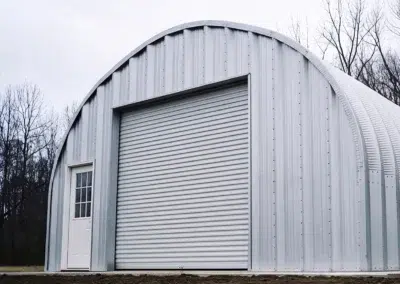
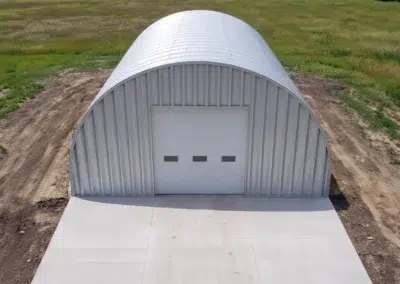
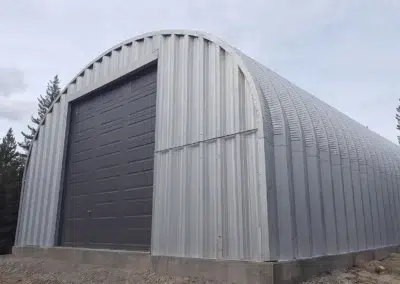
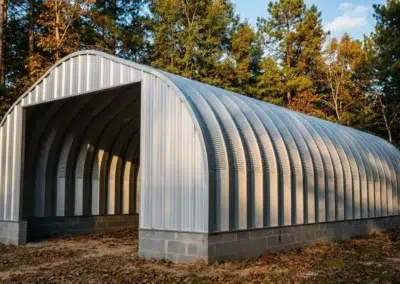
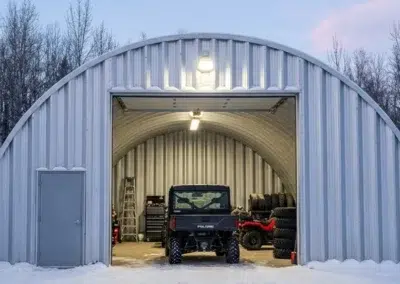
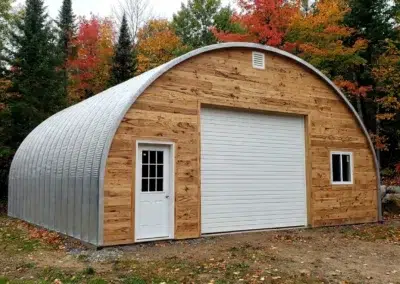
Curved-roof steel can add elbow room: a 20×20 Arched Quonset Hut Kit comfortably fits four bikes, a rolling tool chest, and a tyre changer with a safe 1.2 m (48 in) central aisle. If you pivot to a car-sized shell, browse our 1 car garage kit options.
How do I secure bikes and control moisture for winter layup?
– Security: Set two ground anchors per bike into the slab near each wheel. Thicken slab to 150–200 mm (6–8 in) at anchor points; use through-bolted, rated anchors and 13 mm (1/2 in) hardened chain. Choose a steel door with multi-point locks, hinge bolts, and motion lighting.
– Slab and envelope: 10–15 mil vapour barrier under slab, perimeter insulation, and a thermal break at the door threshold reduce condensation.
– Humidity: Target 45–55% RH. Use a small dehumidifier with a drain, plus trickle ventilation (louvres or HRV as allowed). Breathable covers beat plastic.
– Power: Provide a GFCI-protected outlet by each bike for battery tenders and a dedicated 20 A circuit for tools; confirm spacing, wiring method, and heater rules with your local authority and a licensed electrician. Local zoning may set setbacks, lot coverage, and max height—check before you pour.
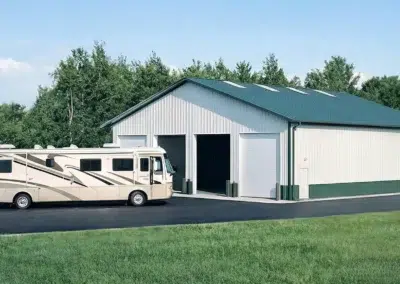
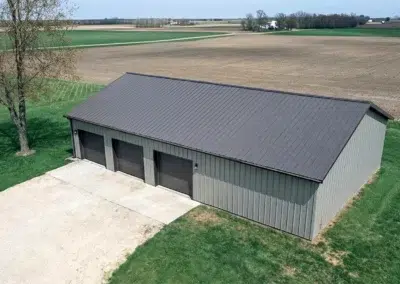
Motorcycle Garage Ideas: Secure Storage for Bikes and Gear Gallery
Steel Building Garage Kits
Building Kits From 30×30 Garages to 200×400 Hubs
Each steel building kit represents the pinnacle of engineering precision and material quality. Built with commercial-grade steel and designed to meet rigorous standards, these structures deliver exceptional durability and performance. From compact garages to large industrial spaces, every kit component undergoes strict quality control to ensure lasting value and structural integrity.
Build realities: foundations, permits, climate loads, and the decisions to make first
Looking for practical motorcycle garage ideas that actually work in Canadian conditions? Here’s how to get from sketch to build: choose the right foundation, confirm permits, account for snow and wind, and lock in your layout, power, and moisture controls before you price it.
What foundation is best for a small bike garage?
For most motorcycle-focused footprints, a reinforced slab-on-grade or monolithic slab with a thickened edge is ideal. It keeps rolling loads stable, simplifies floor drains or trench mats, and lets you cast-in ground anchors for security. Alternatives like screw piles with a framed floor can suit sloped sites, but you’ll still want steel plates or embedded anchors where bikes park. See our garage foundation prep to plan subgrade, insulation, and vapour control for a dry, non-sweating slab.
Do I need a permit for a motorcycle garage?
Canada builds to the National Building Code of Canada; your project must also meet your provincial code and local bylaws. Permit thresholds (size, height, services like power/plumbing, and distance to lot lines) vary by municipality—some exempt small, unserviced accessory buildings, others do not. Electrical work typically needs a separate permit. If you’re close to a property line, expect fire-resistance and opening limits. Ask your municipality’s building department early; don’t assume a “shed exemption” applies to your site.
How do Canadian snow and wind loads affect the design?
Your roof, walls, and connections must be engineered for the site’s specified snow and wind loads under the NBCC and your province’s amendments. Practically, that means adequate roof pitch or drainage, proper truss spacing, sheathing, hold-downs for uplift, and rated doors. In snowy regions, consider ice-dam control, continuous air/vapour barriers, and ventilation to reduce condensation over winter layup.
motorcycle garage ideas: what should I decide before I get a quote?
– Bike count and turning aisle, plus a compact bench or a full garage with workshop zone.
– Security: slab-embedded anchors, solid doors, motion lighting, and a monitored device. The Insurance Bureau of Canada is a good source to check how insurers view outbuildings and security.
– Moisture/rust control: insulated slab edge, vapour barrier, passive/powered ventilation, and a dehumidifier.
– Power: dedicated circuit for battery tenders, task lighting, and a small heater; outlet placement at each bike bay and bench.
– Storage: ventilated helmet/glove cubbies, drip trays, and wall tracks for stands and panniers.
The mistake to avoid
Skipping moisture management. Without insulation, vapour control, and ventilation, warm thaws create condensation that corrodes bikes and gear—even in an unheated garage.
Enter your postal code to get matched with a vetted local builder and receive a local price based on your site, code requirements, and environmental loads.
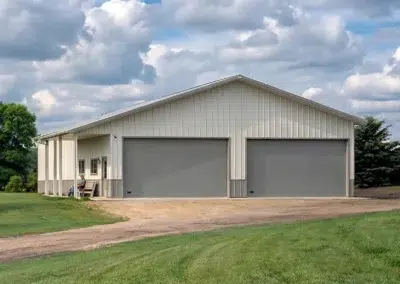
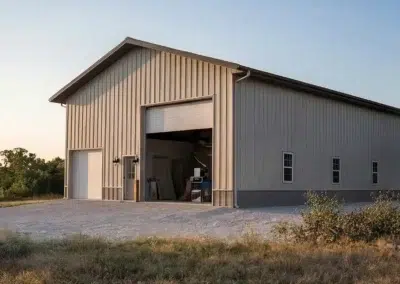
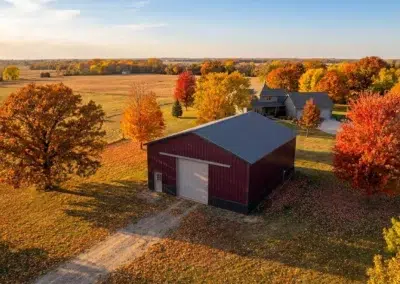
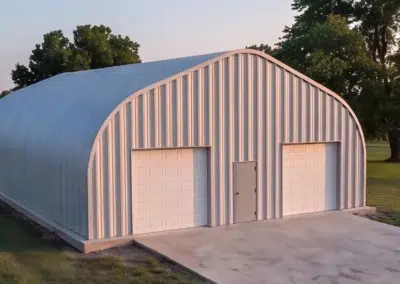
Motorcycle Garage Ideas: Secure Storage for Bikes and Gear FAQs
What materials are best for a motorcycle garage?
Steel is a popular choice for motorcycle garages due to its durability, security, and resistance to weather. Ensure the materials used are suitable for your local climate conditions and comply with the National Building Code of Canada and any provincial amendments.
How do I choose the right door for my motorcycle garage?
Select a door that offers both security and ease of access, such as a steel door with multi-point locks. Consider the width and height to accommodate easy roll-in of motorcycles and ensure it meets local building code requirements.
What should I consider for garage insulation?
Proper insulation is crucial to control moisture and temperature, which helps prevent rust on motorcycles and gear. Evaluate the insulation options for the slab, walls, and roof, and consult with your local authority to ensure compliance with building codes and energy efficiency standards.
Do I need professional help to assemble a motorcycle garage kit?
While many DIY enthusiasts can assemble a motorcycle garage kit, professional assistance ensures compliance with local building codes and optimal structural integrity. Consider hiring a vetted local builder to handle any complexities and confirm all requirements with your municipality.